How to start forex trading as a beginner in 2026 with a structured full course
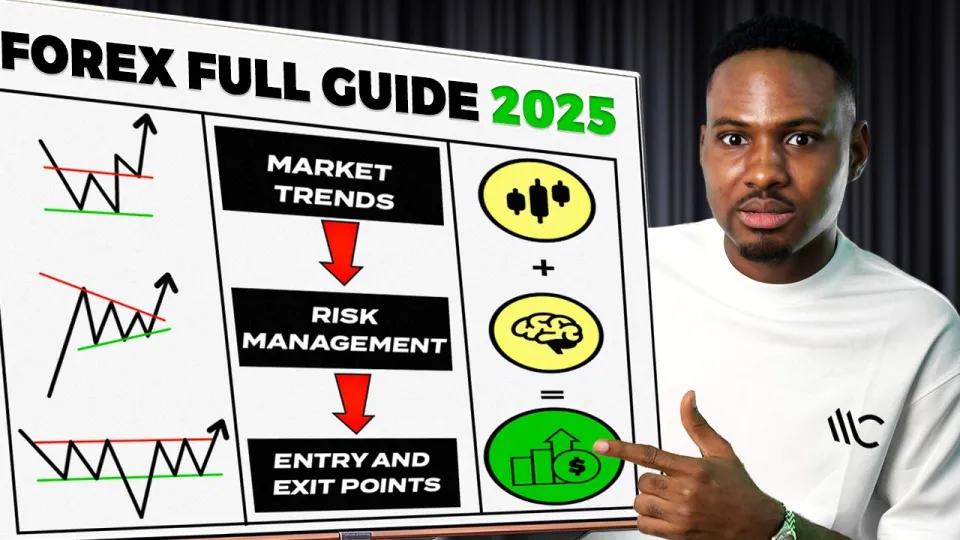
Video: How To Start Forex Trading For Beginners’ 2025 (Full Course)
Need articles like this for your video? They help promote it on YouTube and Google — order them in the Telegram bot @sat_sit_bot. Articles with your video embedded are written and posted by the bot itself — on popular topical sites (no ads). Try it free: 50 articles on us.
· based on the channel Jeffrey Benson Forex
Forex trading for beginners starts with three concrete steps: open a demo account, learn how currency pairs and sessions work, and define a fixed risk limit per trade before any real money is deposited. Everything else — strategy, platform setup, broker choice — sits on top of that foundation. The beginner course published by Jeffrey Benson Forex follows the same order, and students who want the paid track can find it through the Fire Pips FX plans page.
What forex trading actually is and why beginners start there
Forex is the exchange of one currency for another at an agreed price, and it is the largest financial market in the world by daily turnover. Unlike stocks, there is no central exchange: trades are executed over the counter through a network of banks, brokers and liquidity providers, which is why the market runs continuously from Sunday evening to Friday evening GMT.
Currencies are always quoted in pairs. EUR/USD at 1.0850 means one euro buys 1.0850 US dollars. The first currency is the base, the second is the quote, and the price movement is measured in pips — for most pairs the fourth decimal place, so a move from 1.0850 to 1.0860 is ten pips.
Three structural facts shape how a beginner should approach it:
- Leverage is built in. A broker may offer 1:100 or more, so a small deposit controls a large position. This magnifies both gains and losses and is the single most common reason new accounts are wiped out.
- Liquidity is uneven. EUR/USD and GBP/USD trade in enormous volume; exotic pairs such as USD/TRY or USD/ZAR have wider spreads and erratic moves.
- Costs are invisible until you count them. Spread, commission and overnight swap all reduce the edge a strategy needs to be profitable.
How the forex market works across the four trading sessions
The forex day is divided into four overlapping sessions, and the time of day you trade matters as much as the pair you choose. Sydney opens first, Tokyo follows, then London, then New York; the London–New York overlap is the busiest window and typically carries the tightest spreads and the largest ranges.
Volatility behaves differently in each block. The Tokyo session is often range-bound for major pairs, London produces the strongest directional moves in European currencies, and New York reacts to US data releases. A beginner who trades the same pair at 3 a.m. local time and at the London open is effectively trading two different markets.
News is the second driver. Interest rate decisions, inflation prints and employment data move currencies within seconds, and spreads widen sharply right before and after a release. Many experienced traders simply stay flat around major announcements rather than trying to guess the outcome.
Tools and platform setup every beginner needs before the first trade
A workable beginner setup is small: a demo account, a charting platform, a notebook and a risk plan. The course walks through the toolchain in detail, but the essentials are consistent across brokers.
- A regulated broker account. Check the licence, the regulator and the client-money rules before depositing. The video promotes Assex Markets through an affiliate link; that is a commercial recommendation, not a due-diligence shortcut, so verify the entity that will hold your funds.
- MetaTrader 4 or 5. MT5 is the current standard and supports forex, metals, indices and crypto CFDs from one terminal. Linking the broker account to the terminal takes a server name, login and password.
- A demo account funded with virtual capital. Trade the same position sizes you would use live so the practice is meaningful.
- A trading journal. Record entry, exit, reason, session and result for every trade. Reviewing twenty logged trades teaches more than watching twenty more videos.
- A position-size calculator. Lot size, stop distance and account risk determine volume; guessing it is how accounts break.
Building a basic forex strategy foundation
A beginner strategy needs only three decisions: which pair, which direction, and where the trade is wrong. Everything else is refinement. The course frames this as a foundation rather than a system, which is the right altitude — chasing a complex indicator stack before understanding structure is a common detour.
Start with one major pair such as EUR/USD and one timeframe for entries, for example the one-hour chart, with a higher timeframe for context. Mark the obvious levels: recent swing highs and lows, the prior day's high and low, and round numbers where orders cluster. Then define a trigger — a break and retest of a level, or a rejection candle at it — and write the rule down before the market opens.
The exit rules matter more than the entry. A stop loss goes beyond the level that would invalidate the idea, not at a round number chosen for comfort. The target should give at least a 1.5-to-1 reward-to-risk ratio, so a strategy that wins half the time still ends positive after costs. Backtest the rule on historical charts for at least fifty setups before risking a cent.
Placing a first trade and sizing risk correctly
A first live trade should be small enough that losing it changes nothing about your week. The mechanics are straightforward: select the pair, set the order type, enter the volume in lots, attach the stop loss and take profit, and confirm.
Position size follows from risk, not the other way around. If the account holds $1,000 and the limit is 1% per trade, the maximum loss is $10. With a 20-pip stop on EUR/USD, where one standard lot equals roughly $10 per pip, the correct volume is 0.05 lots — not one lot. Getting this arithmetic right is the difference between a learning curve and a blown account.
After the trade closes, log it and review the execution rather than the outcome: was the entry per the rule, was the stop placed logically, was the size correct? A losing trade executed properly is a good trade.
Common beginner mistakes and the questions viewers keep asking
The mistakes that end beginner accounts are repetitive and avoidable. The most expensive is trading without a stop loss or moving it further away when price approaches. The second is oversizing after a loss to win the money back. The third is switching strategies every few days, so no approach is ever given enough trades to prove itself.
Another cluster of problems is psychological and structural. Following signal channels without understanding the setup means you cannot manage the trade when it goes against you. Funding an account with money needed for bills turns every drawdown into panic. And treating a demo account as a game — taking absurd sizes there — builds habits that transfer straight to live trading.
Viewer reaction to the course reflects the same themes: people respond to plain explanations of risk, and several note that writing notes during tutorials helps the material stick, particularly the four sessions. Those are reasonable habits to copy.
Useful links from the course
- Fire Pips FX student plans — the paid mentorship and course track.
- Free daily signal channel — one free trade idea per day.
- Assex Markets registration — the broker promoted in the video, linked to an affiliate code.
- Premium signal group access — subscription entry point via Telegram bot.
Treat signal services as a supplement, not a replacement for your own risk rules. Copy-trading a channel still exposes your capital to the same leverage and drawdown.
The realistic path from first demo trade to consistent execution
Forex is learnable, but it is a skill built through repetition, record-keeping and strict risk control rather than a shortcut to income. The sequence that works is unglamorous: demo first, one pair, one rule set, fifty logged trades, then a small live account with 1% risk per position. Most of the value in the Jeffrey Benson Forex full course lies in that structure — it walks a complete beginner from what a currency pair is to placing and reviewing a trade — while the broker and signal links in it are commercial offers that deserve independent verification. Give the process months rather than weeks, and judge yourself on execution quality, not on any single result.
If you want the structured version with mentorship, start at the Fire Pips FX plans page and compare it against free resources before committing money.
Key takeaways
- Forex is an over-the-counter market where currencies trade in pairs 24 hours a day, five days a week, across four sessions: Sydney, Tokyo, London and New York.
- A beginner needs three things before risking money: a demo account, a charting platform such as MT4 or MT5, and a written risk limit per trade.
- Jeffrey Benson Forex structures its beginner course around seven blocks: intro, what forex is, how the market works, tools, strategy foundation, first trade and mistakes.
- Risk management is the part most beginners skip — a common rule is risking no more than 1–2% of account equity on a single position.
- Broker and signal links promoted in a video are affiliate offers: verify regulation and terms yourself before funding any account.
Source: How To Start Forex Trading For Beginners’ 2025 (Full Course) · Markdown version
Questions & answers
How much money do I need to start forex trading?
You can open a live account with a few hundred dollars, but the practical minimum is set by your risk rule. If you risk 1% per trade and want a 20-pip stop on EUR/USD, a $500 account means 0.02 lots — small but workable. Many beginners stay on demo until they can fund an account they are comfortable losing entirely.
Is forex trading gambling?
It becomes gambling when position size is chosen by emotion and no stop loss is used. With a defined rule set, a fixed risk percentage per trade and a logged sample of outcomes, it is a probabilistic skill with real costs. The difference is process, not the market itself.
Can I copy trades from a signal channel instead of learning?
You can, but you inherit risk you do not control. If the signal provider takes a position far larger than your account can absorb, or the trade moves against you while you are asleep, you have no plan to manage it. Copy-trading works best as a small allocation alongside your own understanding of the setup.
How long does it take to become consistently profitable?
There is no fixed timeline, and anyone promising one is selling something. A realistic beginner path is several months of demo trading with a journal, then a small live account, with profitability judged over at least a hundred trades. Progress comes from execution discipline, not from finding a better indicator.